

A Deep Dive: Navigating the Cobalt and Copper Supply Chain in the DRC
Introduction: The Engine of the Global Energy Transition
The global race toward electrification and a carbon-neutral future has placed two minerals from the Democratic Republic of Congo at the center of the world’s strategic concerns: cobalt and copper. The DRC’s supply chain for these critical minerals is complex, evolving, and fraught with both immense opportunity and significant challenges. For any player in the battery, automotive, or technology sectors, a nuanced understanding of this supply chain is not optional—it is essential for securing supply, managing risk, and ensuring sustainability. This deep dive goes beyond the surface to explore the layers of the DRC’s most vital economic artery.
The Structure of the Supply Chain: From Pit to Port
The journey of cobalt and copper from the DRC to the global market involves multiple actors and stages:
1. The Source: Extraction
This occurs at two primary levels:
- Large-Scale Industrial Mining (LSM): Operated by major international mining companies (e.g., Glencore, CMOC, Barrick) and their partners. These operations are capital-intensive, use sophisticated technology, and generally adhere to international environmental and safety standards. They produce the bulk of the DRC’s copper and a significant portion of its cobalt.
- Artisanal and Small-Scale Mining (ASM): This involves individuals or small groups using rudimentary tools. The ASM sector is a critical source of livelihood for hundreds of thousands but is associated with informality, safety hazards, and difficult-to-track production. A key trend is the effort to formalize and integrate ASM into transparent supply chains, as demonstrated by projects like Mutoshi.
2. The First Aggregation: Processing and Concentration
- After extraction, the ore is processed at or near the mine site. For copper, this involves crushing, milling, and flotation to produce copper concentrates. For cobalt, it is often a by-product of copper processing.
- This stage may also involve the production of intermediate products like cobalt hydroxides.
3. The Critical Checkpoint: The Licensed Comptoir
- This is a legally mandated and licensed trading house. Comptoirs are authorized to purchase minerals from LSM off-takers and, crucially, from formalized ASM cooperatives.
- Their role is pivotal for traceability and due diligence. They are responsible for verifying the legal provenance of the minerals, ensuring they are conflict-free, and aggregating smaller quantities into export-sized parcels.
4. The Export and Refining Phase
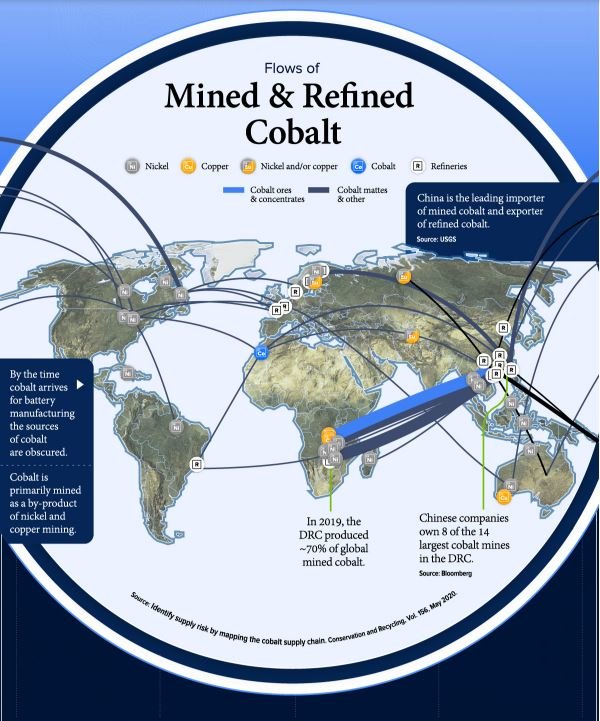
- The aggregated concentrates or intermediate products are then exported, primarily through ports in South Africa and Tanzania.
- The final, critical step is refining, which predominantly occurs overseas in countries like China, Finland, and Belgium. Here, the materials are transformed into pure, high-grade metals (LME-grade copper, battery-grade cobalt) for use in manufacturing.
Key Challenges and Evolving Solutions
- Traceability and ESG Risks: Ensuring a clean, ethical supply chain free from child labor, corruption, and conflict financing remains the paramount challenge. Solutions include:
- Digital Traceability Systems: Using blockchain and other technologies to create an immutable record from the mine to the refiner.
- OECD Due Diligence Guidance: Implementation of this five-step framework by all serious players in the chain.
- Initiatives like the Responsible Minerals Initiative (RMI): Providing audit frameworks and standards for smelters and refiners.
- Local Value Addition (Beneficiation): A major strategic goal for the DRC is to move up the value chain. Currently, most minerals are exported as raw concentrates, with the high-value refining happening elsewhere. There is a growing push for investment in local refineries and battery precursor plants to capture more economic value domestically.
- Infrastructure Deficits: The lack of reliable power and transport infrastructure increases operational costs and creates logistical bottlenecks, particularly for projects in remote areas.
The Future of the Supply Chain: Integration and Value Addition
The future will be defined by:
- Greater Integration: Closer collaboration and formalized relationships between LSM, formalized ASM, and comptoirs.
- Vertical Integration: End-user companies (e.g., automotive OEMs) securing their supply by investing directly in mining projects or forming strategic partnerships with producers.
- The Green Premium: A growing market differentiation and willingness to pay a premium for verifiably sustainable, low-carbon, and ethically sourced DRC cobalt and copper.
Conclusion: A Chain of Strategic Importance
The DRC’s cobalt and copper supply chain is one of the most strategically important in the world. Navigating it successfully requires a combination of technical expertise, robust due diligence, strategic partnerships, and a long-term commitment to sustainable and equitable practices. For those who master its complexities, the reward is a secure position at the heart of the global energy transition.
Is your company looking to navigate the DRC’s mineral supply chain with confidence? The CCG-RDC offers expert guidance, from partner vetting to ESG compliance.